
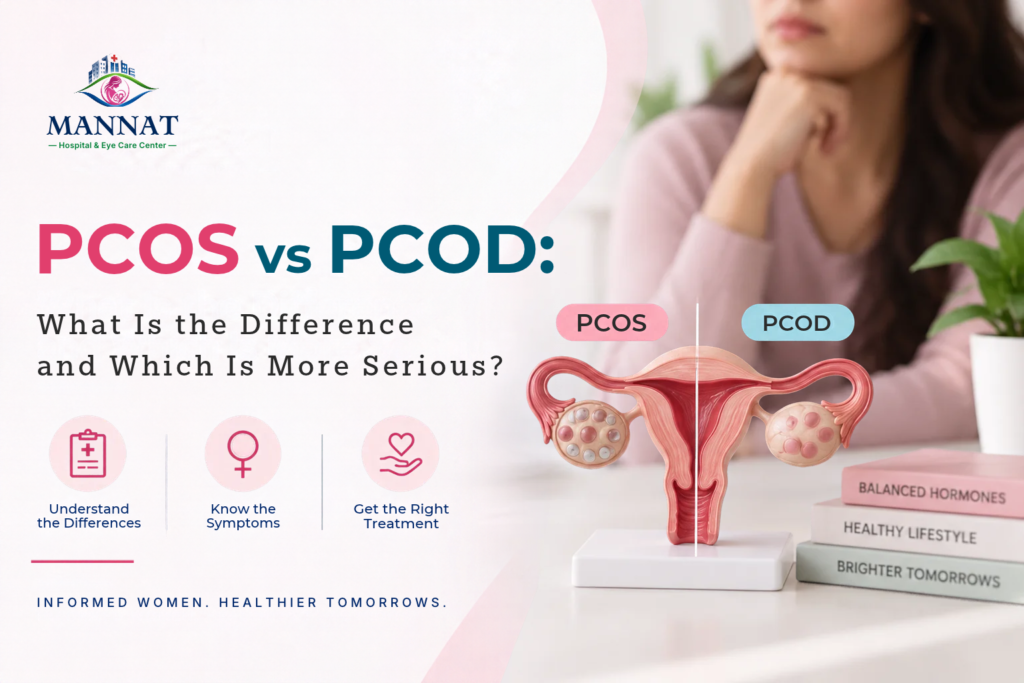
If you’ve come across both “PCOS” and “PCOD” while researching irregular periods or hormonal symptoms, you’re not alone in wondering whether they’re the same condition with two names, or genuinely different diagnoses. The confusion is understandable, since the terms get used interchangeably in everyday conversation far more often than medical accuracy would suggest. Here’s a clear breakdown of PCOS vs PCOD, and which one tends to need more careful, ongoing management.
What Is PCOD?
PCOD, or Polycystic Ovarian Disease, refers to a condition where the ovaries release immature or partially mature eggs, which can develop into cysts over time. It’s primarily related to how the ovaries function and is generally considered a more common, milder condition affecting a large percentage of women during their reproductive years.
What Is PCOS?
PCOS, or Polycystic Ovary Syndrome, is a more complex hormonal and metabolic disorder. It doesn’t just affect the ovaries — it involves broader hormonal imbalances, including elevated androgen (male hormone) levels, insulin resistance, and disrupted ovulation. PCOS is classified as an endocrine disorder, reflecting its wider impact on the body’s overall hormonal system, not just reproductive function.
PCOS vs PCOD: Quick Comparison
| Factor | PCOD | PCOS |
|---|---|---|
| Nature | Primarily an ovarian condition | Broader hormonal/metabolic disorder |
| Severity | Generally milder | Generally more serious, with wider health implications |
| Prevalence | Very common | Less common, but still widespread |
| Fertility impact | Often milder impact, many conceive without major intervention | Can significantly affect ovulation and fertility |
| Associated risks | Fewer long-term metabolic risks | Linked to insulin resistance, diabetes risk, cardiovascular concerns |
| Management approach | Often responds well to lifestyle changes alone | Usually needs a more structured, ongoing management plan |
Why PCOS Is Generally Considered More Serious
PCOS extends beyond reproductive symptoms into broader metabolic health. The insulin resistance commonly associated with PCOS increases the long-term risk of type 2 diabetes, while the hormonal imbalances involved can affect cardiovascular health, weight management, and mental health over time. PCOD, by comparison, more often stays contained to ovarian function and menstrual irregularity without the same degree of systemic metabolic involvement.
Overlapping Symptoms Between PCOS and PCOD
Because the symptoms often overlap significantly, distinguishing between them without proper testing is genuinely difficult:
- Irregular or missed periods
- Weight gain, particularly around the abdomen
- Acne
- Excess hair growth (hirsutism)
- Difficulty conceiving
- Mood changes
This overlap is a major reason the two terms get used interchangeably, even though the underlying conditions differ in scope and severity.
How Are They Actually Diagnosed Differently?
Diagnosis for both conditions typically involves:
- Pelvic ultrasound — to examine the ovaries and check for characteristic cysts
- Hormone testing — particularly important for PCOS, to check androgen levels and related hormonal markers
- Blood sugar and insulin testing — specifically relevant for PCOS, given its association with insulin resistance
- Clinical symptom assessment — reviewing your specific pattern of symptoms alongside test results
A gynecologist’s clinical evaluation, not just an ultrasound finding of ovarian cysts alone, ultimately determines whether a woman’s presentation fits PCOD or the broader criteria for PCOS.
Does the Distinction Actually Change Treatment?
To some extent, yes. PCOD often responds well to lifestyle changes alone — diet, exercise, and weight management — without necessarily requiring long-term medication. PCOS, given its broader hormonal and metabolic involvement, more often benefits from a combined approach involving lifestyle changes alongside medical management, particularly when insulin resistance or significant hormonal imbalance is present. That said, every treatment plan should be based on an individual’s specific symptoms and test results, not the label alone.
Can PCOD Turn Into PCOS?
This is a common question, and the honest answer is that they’re understood as distinct conditions rather than one progressing into the other. However, since symptoms can evolve and worsen over time regardless of the specific diagnosis, ongoing monitoring matters for both conditions, particularly if symptoms change or intensify.
Why Getting the Right Diagnosis Matters
Since PCOS carries broader long-term health implications, correctly identifying which condition you’re dealing with shapes not just your immediate symptom management, but also what preventive health monitoring makes sense going forward. A woman with PCOS benefits from regular monitoring of blood sugar and cardiovascular risk factors in a way that isn’t necessarily as critical for someone with PCOD alone.
Why Choose Mannat Hospital for PCOS and PCOD Evaluation
At Mannat Hospital, our PCOS & Women’s Health program starts with a thorough evaluation to determine exactly which condition — or combination of factors — is driving your specific symptoms, rather than applying a generic label. Dr. Vandana Makkar brings two decades of experience distinguishing between these overlapping conditions and building a management plan suited to each woman’s individual hormonal and metabolic profile.
FAQs
Is PCOD the same as PCOS? No, though the terms are often used interchangeably. PCOD is primarily an ovarian condition, while PCOS is a broader hormonal and metabolic disorder with wider health implications.
Which is worse, PCOS or PCOD? PCOS is generally considered more serious, since it’s linked to insulin resistance, increased diabetes risk, and broader metabolic health concerns, while PCOD tends to stay more contained to ovarian and menstrual symptoms.
Can PCOD affect fertility? Yes, though often to a lesser degree than PCOS. Many women with PCOD conceive without significant intervention, while PCOS can more substantially disrupt ovulation.
How do doctors tell PCOS and PCOD apart? Through a combination of pelvic ultrasound, hormone testing, blood sugar and insulin testing, and a clinical review of symptoms, rather than ultrasound findings alone.
Does PCOD need long-term treatment like PCOS does? Not always. PCOD often responds well to lifestyle changes alone, while PCOS more frequently requires a combined, longer-term management approach due to its broader hormonal involvement.
Should I still see a doctor if I think I only have PCOD, not PCOS? Yes, since only a proper evaluation can confirm which condition you’re actually dealing with, and symptoms that seem mild can sometimes indicate something more significant.
Confused About PCOS or PCOD? Get a Clear Diagnosis
Book a consultation with Dr. Vandana Makkar at Mannat Hospital — accurate diagnosis and personalized care for hormonal health in Varanasi.
Related Reads: