
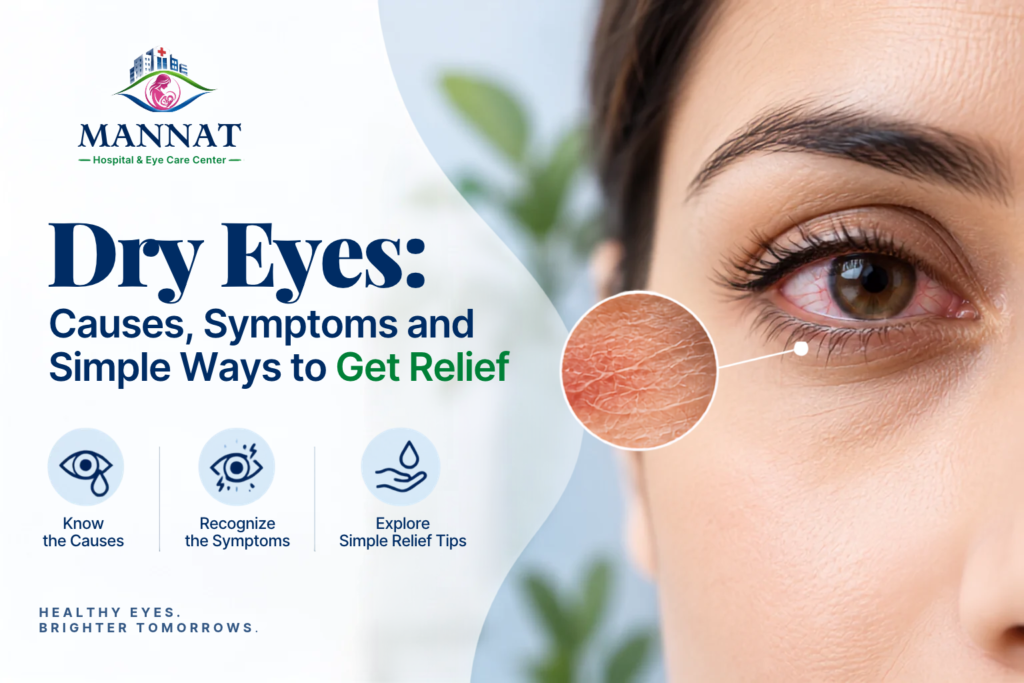
That gritty, burning sensation, like there’s sand in your eyes by the end of the day, is one of the most common eye complaints people bring to a specialist. Dry eye syndrome affects people of all ages, but it’s become especially common with how much time we all spend staring at screens. Understanding what causes it, recognizing the symptoms, and knowing what actually helps can make a real difference in day-to-day comfort.
What Is Dry Eye Syndrome?
Dry eye syndrome happens when your eyes don’t produce enough tears, or when the tears you do produce aren’t good quality enough to keep your eyes properly lubricated. Tears aren’t just water — they’re a carefully balanced mix of water, oil, and mucus, and a problem with any one component can lead to dryness, irritation, and discomfort.
Common Causes of Dry Eyes
Extended Screen Time
We blink significantly less often while looking at screens, which reduces how often tears spread evenly across the eye’s surface. This makes prolonged computer or phone use one of the most common modern causes of dry eyes.
Aging
Tear production naturally decreases with age, making dry eyes considerably more common in older adults, particularly after menopause in women due to hormonal changes.
Environmental Factors
Dry, windy, or air-conditioned environments speed up tear evaporation, making symptoms noticeably worse in certain climates or indoor settings.
Contact Lens Use
Extended contact lens wear can contribute to dry eyes, since lenses can absorb moisture from the eye’s surface and reduce natural tear film stability.
Certain Medications
Antihistamines, some blood pressure medications, and certain antidepressants can reduce tear production as a side effect.
Underlying Health Conditions
Conditions like autoimmune disorders, diabetes, and thyroid disease are associated with a higher likelihood of developing dry eye syndrome.
Eyelid Problems
Conditions affecting the eyelids, including incomplete blinking or eyelid inflammation, can prevent tears from spreading evenly across the eye’s surface.
Common Symptoms of Dry Eyes
- A gritty or sandy sensation in the eyes
- Burning or stinging
- Redness
- Sensitivity to light
- Blurry vision that improves with blinking
- A feeling of heaviness in the eyelids
- Excessive tearing (which can seem counterintuitive, but often happens as the eye overcompensates for dryness)
- Difficulty wearing contact lenses comfortably
If blurry vision is one of your main symptoms, our broader guide on common causes of blurry vision covers dry eye alongside several other possible explanations worth understanding.
Simple Ways to Get Relief
Follow the 20-20-20 Rule
Every 20 minutes, look at something 20 feet away for at least 20 seconds. This simple habit encourages more frequent blinking and gives your eyes a genuine break from screen strain.
Use Artificial Tears
Over-the-counter lubricating eye drops can provide meaningful, immediate relief for mild to moderate dry eye symptoms, and are generally safe for regular use.
Adjust Your Environment
Using a humidifier in dry indoor spaces, avoiding direct airflow from fans or air conditioning onto your face, and taking regular breaks from screens can all reduce symptom severity.
Blink Consciously
Making a deliberate effort to blink fully and regularly, especially during screen use, helps redistribute tears evenly across your eyes.
Stay Hydrated
Adequate water intake supports overall tear production, though this alone typically isn’t enough to resolve significant dry eye on its own.
Consider Warm Compresses
A warm compress applied gently to closed eyes can help if the underlying cause involves the oil-producing glands in your eyelids, which are common contributors to dry eye symptoms.
When Home Remedies Aren’t Enough
If over-the-counter drops and lifestyle adjustments aren’t providing lasting relief, it’s worth seeing an eye specialist rather than continuing to manage symptoms indefinitely on your own. Persistent dry eye can sometimes point toward an underlying condition, or simply need a more targeted treatment approach than generic drops can offer.
When Should You See an Eye Specialist?
Book a consultation if:
- Symptoms persist despite regular use of artificial tears
- Dry eyes are significantly affecting your daily comfort or ability to wear contact lenses
- You experience persistent redness, pain, or vision changes alongside dryness
- Symptoms seem to be getting progressively worse over time
How Is Dry Eye Diagnosed and Treated?
A comprehensive eye exam can assess tear production and the overall health of your eye’s surface. Depending on the cause and severity, treatment may include prescription eye drops, punctal plugs to reduce tear drainage, treatment for underlying eyelid conditions, or addressing any contributing medications or health conditions alongside your primary doctor.
Why Choose Mannat Hospital for Dry Eye Care
At Mannat Hospital & Eye Care Centre, a thorough evaluation looks at the specific underlying cause of your dry eyes rather than offering a generic, one-size-fits-all solution. Dr. Bhavesh Makkar, a fellowship-trained eye specialist, takes the time to identify whether your dry eyes stem from environmental factors, an underlying condition, or something else entirely, so treatment actually addresses the root cause.
FAQs
What causes dry eyes the most? Extended screen time is one of the most common modern causes, since we blink significantly less often while looking at screens, alongside aging, environmental factors, and certain medications.
Are artificial tears safe to use every day? Yes, most over-the-counter artificial tears are safe for regular daily use, though your eye specialist can recommend a specific formulation if you need more frequent relief.
Can dry eyes cause blurry vision? Yes, dry eyes can cause temporary blurry vision that typically improves with blinking, since an uneven tear film affects how light focuses on the eye.
Is dry eye syndrome permanent? Not necessarily. Many cases improve significantly with lifestyle adjustments and proper treatment, though some underlying causes may require ongoing management.
Can contact lenses cause dry eyes? Yes, extended contact lens wear can contribute to dry eyes by affecting the natural tear film, which is why proper lens care and wear duration matter.
When should I stop trying home remedies and see a specialist? If artificial tears and lifestyle changes haven’t improved your symptoms after a few weeks, or if symptoms are worsening, it’s time to consult an eye specialist for a proper evaluation.
Tired of Dealing With Dry, Irritated Eyes?
Book a consultation with Dr. Bhavesh Makkar at Mannat Hospital & Eye Care Centre — find the actual cause and get lasting relief.
Related Reads: