
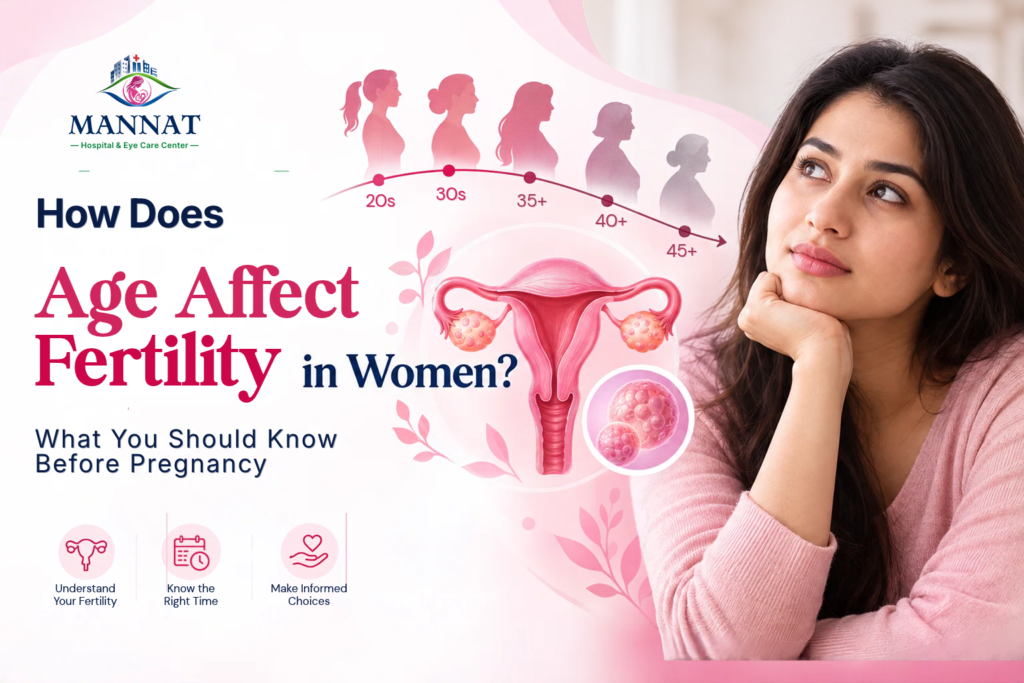
Age sits at the center of almost every fertility conversation, and for good reason. It’s one of the few factors that affects fertility steadily, predictably, and for every woman, regardless of overall health. Understanding exactly how age affects fertility in women, decade by decade, helps you make informed decisions, whether you’re planning a pregnancy now or simply want clarity for the future.
Why Age Matters So Much for Fertility
Women are born with all the eggs they’ll ever have. That number declines steadily from birth, and it declines faster after a certain point. Egg quality also changes with age, not just quantity. Both factors directly affect the chances of conceiving and carrying a healthy pregnancy.
Fertility in Your 20s
Fertility is generally at its highest throughout your 20s. Egg quantity and quality are both strong, and the monthly chance of conceiving with regular, unprotected intercourse is highest during this decade. This doesn’t mean every woman in her 20s conceives easily. But statistically, this is the period with the fewest age-related fertility hurdles.
Fertility in Your Early 30s
Fertility remains relatively strong through the early 30s, though a gradual decline begins. Many women conceive without difficulty during this period. The decline is subtle enough that most women don’t notice any change in their own cycles or symptoms.
Fertility After 35
This is the point where the decline accelerates more noticeably. Egg quantity drops faster, and egg quality changes in ways that increase the chance of chromosomal abnormalities, which can affect both the ability to conceive and the risk of miscarriage. This is exactly why doctors recommend fertility evaluation after six months of trying, rather than the standard one year, once you’re past 35.
Fertility After 40
Natural conception becomes significantly more difficult after 40, though it’s still possible for many women. Egg quality has typically declined substantially by this point, and pregnancy-related risks, including miscarriage and certain complications, rise as well. Women trying to conceive after 40 often benefit from earlier, more proactive fertility evaluation rather than extended independent trying.
What Specifically Changes With Age?
- Egg quantity (ovarian reserve) declines steadily from birth, with a faster decline after the mid-30s
- Egg quality decreases, increasing the likelihood of chromosomal abnormalities
- Hormonal changes affect ovulation regularity as you approach perimenopause
- Uterine environment can change slightly with age, though this plays a smaller role than egg-related factors
- Pregnancy-related risks, including miscarriage, gestational diabetes, and high blood pressure, increase gradually with maternal age
Does Age Affect Men’s Fertility Too?
Yes, though typically to a lesser degree and later than it does for women. Sperm quality can decline with age, and male age has been linked to slightly increased risks of certain conditions in offspring. Our guide on the role of male fertility covers this alongside other male fertility factors in more detail.
Can You Test Your Own Fertility Potential Related to Age?
Yes, to some extent. Ovarian reserve testing, through specific blood hormone tests and an ultrasound antral follicle count, gives doctors a reasonable estimate of your remaining egg quantity. This doesn’t predict pregnancy with certainty, but it provides useful, individualized information beyond age alone, since fertility decline doesn’t follow an identical timeline for every woman.
What Can You Do If You’re Planning Pregnancy Later?
- Get evaluated proactively, rather than waiting for difficulty to arise, especially if you’re above 35
- Consider ovarian reserve testing if you want clearer, individualized information about your current fertility status
- Discuss fertility preservation options, like egg freezing, if you’re planning to delay pregnancy significantly and want to explore proactive options
- Address other health factors early, since conditions like thyroid disorders or PCOS can compound age-related decline if left unmanaged
Is It Ever “Too Late” to Get Help?
No. Even for women in their 40s, fertility evaluation and treatment can meaningfully improve the chances of conceiving. The honest, important message isn’t that it’s too late. It’s that earlier evaluation generally means more options, which is why proactive planning matters more than waiting until significant difficulty arises.
Why Choose Mannat Hospital for Age-Related Fertility Guidance
At Mannat Hospital, our infertility consultation services include thorough evaluation of age-related fertility factors, giving women clear, individualized information rather than generic statistics alone. Dr. Vandana Makkar brings two decades of experience guiding women of all ages through fertility planning and treatment, with honest, practical advice tailored to each individual situation.
FAQs
At what age does female fertility start declining? Fertility declines gradually from the late 20s, with a more noticeable acceleration after age 35, when both egg quantity and quality change more significantly.
Can I still get pregnant naturally after 40? Yes, many women conceive naturally after 40, though it becomes more difficult, and proactive fertility evaluation is often recommended rather than extended independent trying.
Does age affect fertility in men too? Yes, though typically later and to a lesser degree than in women, male age can affect sperm quality and certain pregnancy-related risks.
What is ovarian reserve testing? It’s a combination of blood hormone tests and an ultrasound measurement that estimates your remaining egg quantity, giving more individualized fertility information than age alone.
Should I see a fertility specialist before trying to conceive if I’m over 35? It’s reasonable to consider a proactive consultation, especially if you want individualized information about your fertility status before or soon after you start trying.
Is it too late to seek fertility treatment in my 40s? No, fertility evaluation and treatment can still meaningfully help many women in their 40s, though earlier evaluation generally provides more options.
Planning a Pregnancy and Want Clarity on Your Fertility?
Book a consultation with Dr. Vandana Makkar at Mannat Hospital — honest, individualized fertility guidance in Varanasi.
Related Reads: