
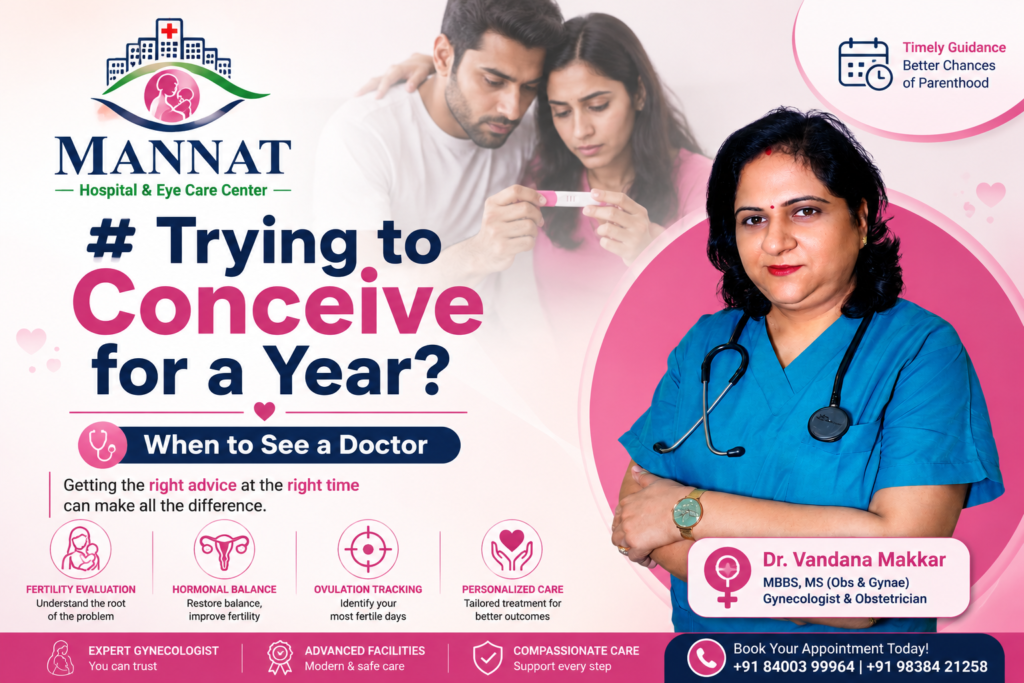
If you’ve been trying to conceive for a year without success, it’s natural to feel a mix of confusion, worry, and frustration. Many couples wonder how long is “too long” to keep trying on their own before seeking help. The good news is that there’s a clear, medically recognized timeline for when to consult a specialist — and reaching out sooner rather than later often leads to better outcomes.
What Does “Trying to Conceive for a Year” Actually Mean?
Doctors generally define infertility as not conceiving after one year of regular, unprotected intercourse. This one-year mark isn’t arbitrary — it’s based on the fact that most healthy couples conceive within this timeframe, so continued difficulty beyond it is considered worth investigating rather than simply waiting further.
The timeline shifts depending on age:
- Under 35: Consult a doctor after 1 year of trying without success
- 35 and above: Consult a doctor after 6 months, since fertility naturally declines more quickly with age
- 40 and above: Many specialists recommend seeking advice even sooner, sometimes within 3 months
Why the One-Year Mark Matters
Fertility isn’t just about the ability to conceive — it’s also about time. The earlier an underlying cause is identified, the more treatment options are typically available, and the better the chances of a positive outcome. Waiting too long before seeking help can sometimes mean missing a window where simpler treatments would have been effective.
Common Reasons Couples Struggle to Conceive
There are many possible causes behind difficulty conceiving, and often it isn’t just one factor. Common contributors include:
- Ovulation disorders — including conditions like PCOS, which affect regular egg release
- Structural issues — such as blocked fallopian tubes or uterine abnormalities
- Male factor infertility — accounting for a significant share of cases, related to sperm count, motility, or quality
- Age-related decline — egg quality and quantity naturally reduce over time, particularly after 35
- Hormonal imbalances — affecting ovulation, implantation, or overall reproductive function
- Unexplained infertility — in some cases, no specific cause is identified even after thorough testing, which still leaves several effective treatment paths available
Signs You Shouldn’t Wait the Full Year
While the one-year guideline applies to most couples, certain signs suggest it’s worth consulting a doctor sooner:
- Irregular or absent periods
- Known or suspected PCOS
- History of pelvic infections or surgery
- Previous miscarriages
- Known male fertility concerns
- Either partner is above 35
If any of these apply to you, there’s no need to wait out the full year before reaching out for an evaluation.
What Happens During an Infertility Consultation?
A first consultation is typically a conversation, not an immediate battery of tests. Your doctor will usually:
- Review your medical history, cycle patterns, and any previous pregnancies
- Discuss lifestyle factors that could be relevant
- Recommend initial tests for both partners, such as hormone levels, ovulation tracking, or a semen analysis
- Explain what the results mean and what the next steps could look like, based on your specific situation
This first visit is often more reassuring than people expect — many couples find simply having a clear plan reduces a significant amount of the stress they’ve been carrying.
Does PCOS Affect Fertility?
PCOS is one of the most common causes of ovulation-related infertility. It doesn’t mean pregnancy isn’t possible — with proper management, many women with PCOS do conceive successfully. However, it does mean fertility often needs a more structured, medically guided approach rather than simply continuing to try without support. If you suspect PCOS may be a factor, our PCOS & Women’s Health program focuses on long-term, personalized management that also supports fertility goals.
Why Early Evaluation Matters
Many couples delay seeking help out of hope that “it will happen naturally,” embarrassment, or simply not knowing when the right time is. But early evaluation isn’t a sign that something is definitely wrong — it’s simply the fastest way to either rule out concerns or start addressing them, whichever the case may be. A large number of fertility challenges are treatable, especially when identified early.
Why Choose Mannat Hospital for Fertility Care
At Mannat Hospital, Dr. Vandana Makkar brings two decades of experience in infertility evaluation and treatment, including IUI, alongside broader expertise in gynecology and high-risk pregnancy care. Our infertility consultation services are designed to be thorough yet compassionate, with clear explanations at every step rather than overwhelming medical jargon. For couples who go on to conceive, our gynecology and pregnancy care teams continue that same supportive care through delivery.
FAQs
How long should we try before seeing a fertility doctor? Generally one year for couples under 35, and six months for those 35 or older, though certain risk factors warrant seeing a doctor sooner.
Does trying to conceive for a year always mean infertility? Not necessarily. It simply means it’s time for an evaluation to understand what might be contributing to the delay, since many causes are treatable.
Is infertility usually the woman’s issue? No. Male factor infertility accounts for a significant share of cases, which is why both partners are typically evaluated together.
Can PCOS be managed to improve fertility? Yes, with the right combination of lifestyle changes and medical treatment, many women with PCOS successfully conceive.
What tests are done during an infertility consultation? This varies by individual case but often includes hormone testing, ovulation tracking, and a semen analysis for the male partner, guided by your specific history.
Is it normal to feel anxious before the first fertility consultation? Yes, it’s a very common feeling. Most couples find that having a clear plan after the first visit reduces much of that anxiety.
Trying to Conceive and Not Sure What’s Next?
Book a consultation with Dr. Vandana Makkar at Mannat Hospital — compassionate, experienced fertility care in Varanasi.
Related Reads: